
It’s easy to view all the cells with conditional formatting rules applied in Google Sheets. However, there is no built-in option to select all such cells at once.
Unfortunately, as of writing this post, Google Sheets does not offer an equivalent to Excel’s Go To > Special > Conditional Formats feature. This is one of the features I miss in Google Sheets, along with Goal Seek and Formula Auditing.
Quick Answer
To view all cells with conditional formatting in Google Sheets:
- Select the entire sheet (Ctrl + A or ⌘ + A)
- Go to Format → Conditional formatting
- Hover over each rule in the sidebar to highlight the affected cells
Note: Google Sheets does not currently allow selecting all conditionally formatted cells at once.
How to View All Cells with Conditional Formatting in Google Sheets
This is a quick tip, so let’s jump straight to the steps. To view all the cells with conditional formatting applied, you first need to select all the cells in the sheet.
How to Select All Cells in Google Sheets
To select all cells in a sheet, use one of the following methods:
- Press Ctrl + A on Windows or ⌘ + A on Mac
- Click the Select All button (the small square in the top-left corner where the row numbers and column letters meet)
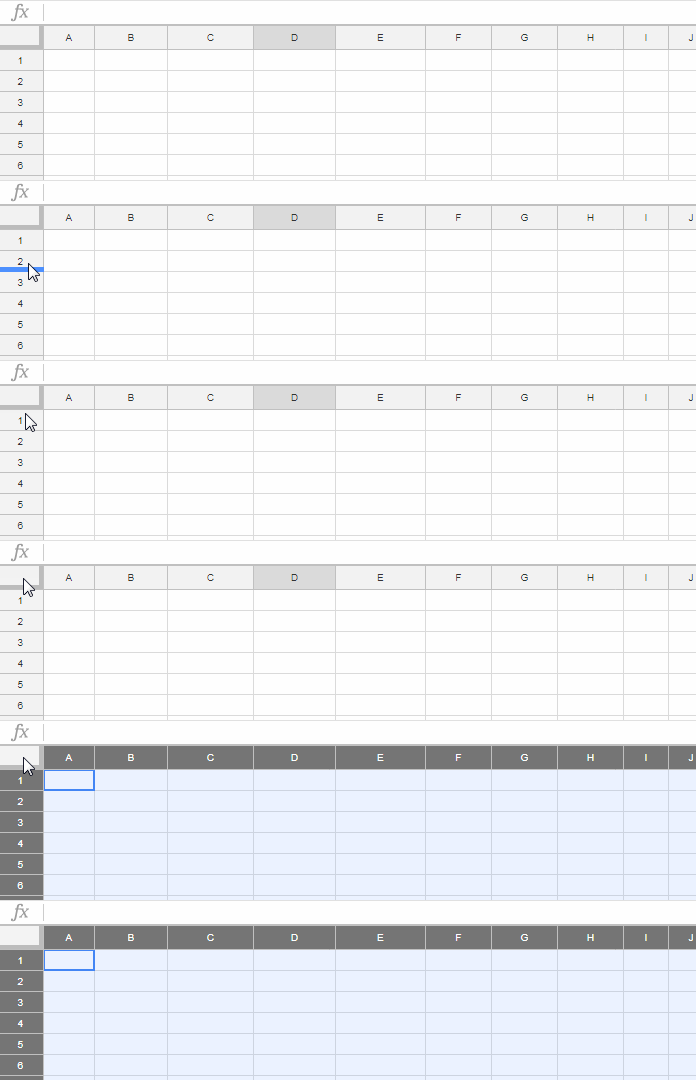
View All Conditional Formatting Rules in a Sheet
Once all the cells in the sheet are selected, follow these steps:
- Go to the Format menu
- Click on Conditional formatting
This will open the Conditional Format Rules sidebar, where you can see all the applied rules.
- Hover your mouse over any rule to highlight the affected cells
- A light green border will appear around the cells where that particular rule is applied
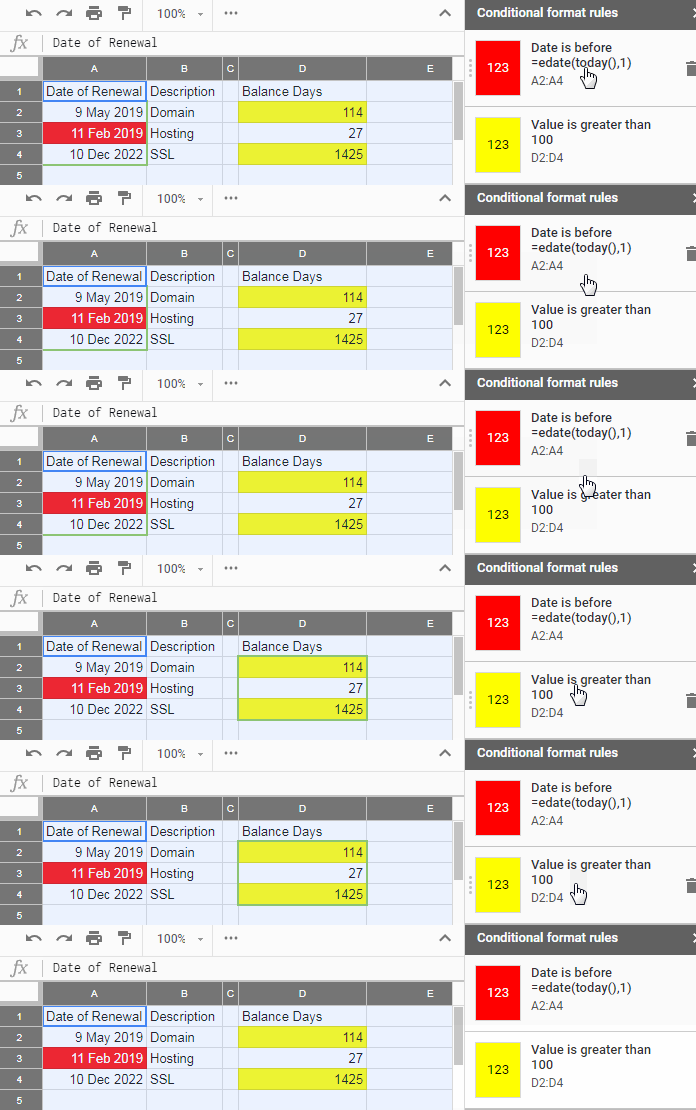
This allows you to visually identify all conditional formatting ranges in the sheet by reviewing each rule.
Note: If some rules apply to areas outside the visible screen, you may need to reduce the zoom level (for example, to 50%) or scroll to locate them.
Limitations of This Method
While this approach works well, there are a few limitations:
- You cannot select all conditionally formatted cells at once
- You must review rules one by one by hovering over them
- Overlapping rules can make it harder to identify exact ranges
- Rules applied to off-screen ranges may require zooming or scrolling
When Should You Use This Method?
Use this method when you want to:
- Audit or review conditional formatting rules in a sheet
- Quickly locate where specific rules are applied
- Manage or clean up existing formatting
If you need a structured list of formatted cells for analysis, this approach may not be sufficient.
Managing Conditional Formatting Rules in Google Sheets
From the Conditional Format Rules sidebar, you can:
- Edit existing rules
- Delete rules that are no longer needed
- Reorder the rules to change their priority
FAQs
Can I View Conditional Formatting Rules for the Entire Workbook?
No, Google Sheets only allows you to view the conditional formatting rules for the current worksheet, not the entire workbook.
How Do I Select a Conditional Formatted Range?
To navigate to a specific range affected by a conditional formatting rule:
- Open the Conditional Format Rules sidebar
- Click on the rule you want to navigate to
- Copy the range listed under Apply to range
- Go to the Accessibility menu
- Click Go to range
- Paste the copied range
- Click the right arrow to jump to the range
Tip: If you’re working with multiple sheets, you may also want to check How to Jump to a Specific Sheet Tab in Google Sheets for faster navigation.
Conclusion
While Google Sheets doesn’t provide a direct way to select all cells with conditional formatting, you can still easily view and manage them using the Conditional Format Rules sidebar. By selecting all cells and reviewing each rule, you can quickly identify where formatting is applied and make necessary adjustments.
For a broader understanding of how conditional formatting works, including rules, tips, and advanced techniques, see The Ultimate Guide to Conditional Formatting in Google Sheets.